At the FIA Global Cleared Markets Conference in Boca Raton, CFTC Chair Michael S. Selig outlined plans to introduce a digital-asset taxonomy, new DeFi regulatory guidance, and updated rules for leveraged crypto trading.
The message was clear: regulators want to replace years of uncertainty with a structured framework that could bring crypto liquidity, innovation, and derivatives markets back to the United States.
For traders, builders, and institutional investors, the implications are significant.
Key Points:
• Crypto asset taxonomy: CFTC preparing a framework to clarify whether tokens fall under CFTC or SEC oversight.
• DeFi guidance coming: Regulators may define when wallet and DeFi developers must register as financial intermediaries.
• Leverage rules review: Margin and leveraged crypto trading are being examined under commodity trading laws.
• “Project Crypto” initiative: SEC and CFTC working together to reduce regulatory conflicts.
• Market impact: Clearer rules could attract institutional capital and bring more crypto trading back to the U.S.
A Regulatory Reset for the Crypto Industry
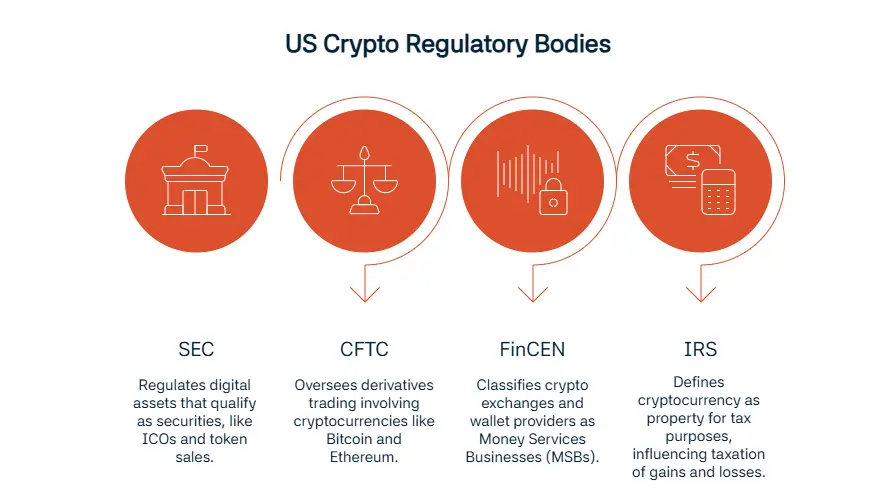
For much of the past decade, crypto firms navigating the U.S. regulatory environment faced a basic problem: no one could clearly explain which agency regulated what.
Tokens sometimes looked like securities, sometimes like commodities, and sometimes like something entirely new.
Speaking to a room filled with derivatives executives and financial market leaders, Selig acknowledged that ambiguity.
“We will advance a clear crypto asset taxonomy so that market participants can understand whether their products fall within CFTC jurisdiction, SEC jurisdiction, both, or neither.” — Michael S. Selig
That statement hints at one of the most consequential regulatory initiatives currently underway.
A crypto asset taxonomy would finally define how digital assets are categorized across the U.S. regulatory system.
Also Read: Coinbase Launches Regulated Crypto Futures Trading Across 26 European Countries
Why the Asset Taxonomy Matters
Today, crypto firms often operate in a gray area.
A project launching a token may not know whether it should register with the Commodity Futures Trading Commission, the Securities and Exchange Commission, both agencies, or neither.
The forthcoming taxonomy aims to change that.
Instead of overlapping interpretations, the framework would establish clear jurisdictional boundaries.
Possible Classification Structure
| Asset Category | Likely Regulator | Example |
|---|---|---|
| Digital Commodities | CFTC | Bitcoin, potentially Ether |
| Security Tokens | SEC | Tokenized equity products |
| Utility Tokens | Mixed oversight | Governance tokens |
| Stablecoins | Multi-agency oversight | Payment tokens |
For institutional investors, clarity around classification is crucial.
Large financial firms often avoid markets where regulatory boundaries remain unclear.
A unified taxonomy could therefore unlock significant institutional capital flows into digital assets.
Related:
DeFi Regulation Moves Into Focus
The second major announcement focused on decentralized finance (DeFi).
For years, regulators struggled with a key question:
If a financial protocol runs entirely on code, who is responsible for regulatory compliance?
Selig said the agency intends to provide guidance on whether developers of non-custodial software systems — including wallets and DeFi applications must comply with intermediary registration rules.
“For too long, there has been an open question as to whether software providers trigger the CFTC’s registration requirements.” — Michael S. Selig
The guidance could determine when developers are considered technology providers and when they are treated as regulated financial intermediaries.
This distinction matters enormously for the open-source ecosystem.
Clearer rules could encourage venture funding and developer activity in decentralized finance platforms that currently operate under regulatory uncertainty.
Leveraged Crypto Trading Back Under Review
Perhaps the most market-sensitive topic discussed in the speech involved leveraged crypto trading.
Globally, derivatives dominate crypto markets.
Perpetual futures and margined trading account for the majority of trading volume across major exchanges.
Yet most of this activity occurs outside the United States due to regulatory restrictions.
The CFTC is now examining how leveraged retail crypto transactions should be treated under the “actual delivery” exception, a rule that determines whether certain trades qualify as spot transactions or derivatives.
Global Crypto Derivatives Market Snapshot
| Metric | Estimated Value |
|---|---|
| Annual crypto derivatives volume | $90+ trillion |
| Share of global crypto trading from derivatives | Majority |
| U.S. regulated derivatives share | Small minority |
If regulatory clarity emerges, analysts believe U.S. exchanges could capture a larger portion of global derivatives liquidity.
That would represent a significant shift in the geography of crypto markets.
Project Crypto: Ending the SEC–CFTC Divide
Another key element of Selig’s remarks involved cooperation between U.S. regulators.
For years, disagreements between the SEC and CFTC created regulatory friction for digital asset companies.
Now, both agencies are working together through an initiative known as Project Crypto.
The goal is straightforward: create a coordinated regulatory framework.
According to Selig, the initiative will increase communication between agencies and produce shared standards for digital asset oversight.
The collaboration could help resolve one of the most persistent challenges facing the industry conflicting regulatory interpretations.
A Shift Away From Enforcement-First Regulation
The speech also hinted at a broader change in regulatory philosophy.
During previous years, many crypto companies argued that regulators relied heavily on enforcement actions rather than providing clear rules.
Selig suggested the focus is shifting toward principles-based rulemaking.
“We are at the beginning of another great wave of innovation, as markets continue to digitize and crypto assets become mainstream.”
Instead of reacting to new technology through litigation, regulators appear increasingly interested in building frameworks designed specifically for digital markets.
For blockchain developers and financial institutions, that shift could significantly reduce regulatory risk.
What It Means for the Crypto Market
These policy initiatives may appear technical, but their implications are substantial.
Institutional Adoption
Clear regulatory boundaries often determine whether major financial institutions participate in emerging markets.
A defined taxonomy could encourage more banks, hedge funds, and asset managers to expand their crypto exposure.
DeFi Development
If developers gain clarity on registration requirements, decentralized finance projects may be more willing to build within U.S. jurisdictions.
Derivatives Liquidity
Revised rules for leveraged trading could allow more derivatives products to operate legally within the United States.
Market Stability
Reduced regulatory uncertainty tends to lower risk premiums in emerging markets.
That can lead to greater stability and deeper liquidity over time.
Also Read: Ripple and DTCC: Why This Integration Is Drawing Serious Attention
Why the Industry Is Watching Closely
Crypto markets have matured significantly over the past decade.
What began as a niche technology experiment now supports billions of dollars in daily trading volume and a rapidly growing ecosystem of financial applications.
Yet regulation has often struggled to keep pace.
The CFTC’s proposed initiatives suggest regulators are attempting to adapt oversight frameworks to match the technological realities of blockchain markets.
If implemented effectively, these rules could reshape how crypto operates within the world’s largest financial system.
The regulatory blueprint outlined in Boca Raton suggests the United States may be preparing to redefine its relationship with digital assets.
For the global crypto industry, the next phase will depend on how quickly these proposals translate into formal rules.
And for traders, builders, and investors alike, the message from regulators is increasingly clear: the structure of crypto markets is entering a new chapter.
Follow CoinSpectra.in for more global crypto market intelligence and regulatory insights.

Potaraju Ramesh
Potaraju Ramesh is the Founder and Lead Market Analyst at CoinSpectra.in, an independent digital publication focusing on cryptocurrency and Web3. Since 2017, he has been analyzing market cycles, on-chain data, and Indian regulatory frameworks. His editorial approach is built on transparency and data-driven neutrality, providing readers with the context needed to understand complex digital asset shifts.