
The crypto market opened the week with a cautious tone as Bitcoin slipped slightly while regulators in the United States signaled support for tokenized securities and South Korea reaffirmed its restrictions on dollar-backed stablecoins. Meanwhile, Ethereum co-founder Vitalik Buterin raised fresh concerns about digital privacy risks in the age of artificial intelligence.
Put simply, three powerful forces are shaping the market at once: regulation, infrastructure innovation, and the growing overlap between crypto and AI.
Key Takeaways
• U.S. regulators signal openness to tokenized securities, potentially easing the path for blockchain-based financial assets.
• South Korea maintains restrictions on U.S. dollar stablecoins, limiting their use by domestic companies.
• Vitalik Buterin warns AI agents may expose behavioral data, increasing the need for cryptographic privacy tools.
• Bitcoin trades near $67K, while several small-cap tokens posted strong gains.
U.S. Regulators Move Toward Tokenized Financial Assets
Tokenization returned to the spotlight after U.S. financial regulators signaled a more flexible stance toward blockchain-based financial instruments.
Instead of strictly applying traditional Basel banking standards to tokenized assets, regulators are reportedly considering a technology-neutral framework. The approach focuses on the function of financial products rather than the technology used to represent them.
Put simply, a tokenized bond or security would be evaluated under existing financial market rules rather than new restrictions designed specifically for blockchain assets.
Also Read: Binance Terror Lawsuit Dismissed as US Court Signals Legal Shift
Why Tokenization Matters
Tokenization converts traditional financial assets—such as stocks, bonds, or real estate—into digital tokens recorded on blockchain networks. The structure can improve settlement speed, transparency, and accessibility.
According to industry research cited by Bloomberg Intelligence, the global tokenized asset market could exceed $16 trillion by 2030 if adoption accelerates across capital markets.
Large financial institutions have already begun experimenting with the model.
- JPMorgan’s Onyx platform has processed billions in tokenized transactions
- BlackRock and Franklin Templeton have explored blockchain-based funds
- Several central banks are testing tokenized government securities
Larry Fink, CEO of BlackRock, previously described tokenization as “the next generation for markets,” arguing that blockchain infrastructure could eventually transform how securities are issued and traded.
For crypto markets, the regulatory shift signals something important: blockchain is increasingly being viewed as financial infrastructure rather than a speculative asset class.
Also Read: Institutional Capital Returns as BlackRock Bitcoin ETF Inflows Signal Market Shift
South Korea Maintains Strict Stablecoin Restrictions
While the United States appears to be opening the door to tokenized financial instruments, regulators in South Korea are taking a more cautious approach toward stablecoins.
The country’s Financial Services Commission (FSC) plans to revise certain digital asset regulations but will continue restricting domestic companies from using U.S. dollar-backed stablecoins such as USDT and USDC.
Authorities fear that large-scale stablecoin adoption could undermine monetary oversight and accelerate capital outflows.
Put simply, regulators want to prevent companies from bypassing the traditional banking system by holding dollar-denominated digital assets.
An FSC policy note cited by regional media explained the concern:
“Stablecoins linked to foreign currencies may create financial stability risks if widely adopted by domestic companies,” the Financial Services Commission said in a regulatory briefing.
South Korea remains one of the world’s most active crypto markets. Retail trading volumes regularly rival equity markets during periods of high volatility.
Yet regulators have consistently taken a conservative stance, especially following the collapse of TerraUSD in 2022, which wiped out billions in market value and triggered widespread regulatory scrutiny.
The current policy suggests that South Korea prefers tight oversight of stablecoin flows until clearer global standards emerge.
Vitalik Buterin Warns AI Could Expose User Data
Another debate shaping the industry came from Ethereum co-founder Vitalik Buterin, who recently highlighted the intersection between artificial intelligence and digital privacy.
In remarks shared through developer discussions and public commentary, Buterin argued that AI agents could unintentionally expose sensitive behavioral patterns.
Even seemingly harmless activity—such as API calls, transaction timing, or interaction patterns—can reveal user behavior when analyzed by sophisticated AI systems.
“Privacy must remain a core part of the internet’s architecture,” Buterin wrote in a recent technical discussion. “Without strong cryptographic protections, AI could amplify data-exposure risks.”
The warning arrives as AI-powered tools become more integrated into financial services, trading platforms, and blockchain applications.
Privacy Technologies Under Development
Developers across the crypto ecosystem are exploring several privacy-focused technologies:
- Zero-Knowledge Proofs (ZK proofs) – allow verification of information without revealing the underlying data
- Encrypted computation systems – enable analysis without exposing raw user data
- Privacy-preserving identity frameworks – give users control over personal credentials
Put simply, these tools aim to ensure that blockchain transparency does not come at the cost of personal privacy.
For Ethereum developers, privacy is increasingly seen as the next frontier after scalability improvements.
See more: Ripple and DTCC: Why This Integration Is Drawing Serious Attention
Market Snapshot: Bitcoin Holds Key Support
The broader crypto market showed modest weakness over the past 24 hours, though price movements remained within typical volatility ranges.
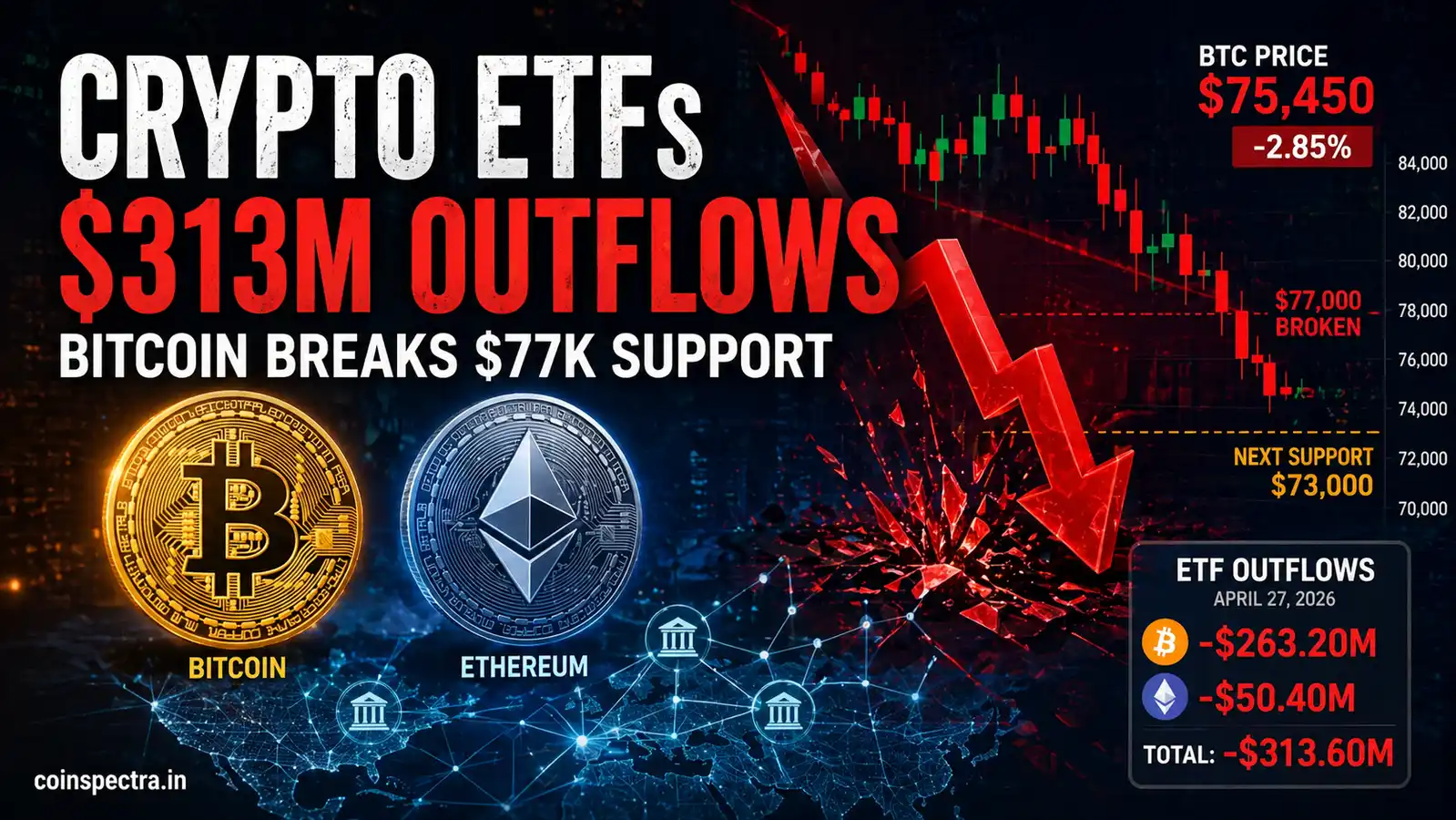
Bitcoin continues trading near $67,000, a level many analysts consider an important technical support zone.
Major Asset Performance (24h)
- Bitcoin (BTC): $67,186 – down 1.0%
- Ethereum (ETH): $1,942 – down 1.9%
- Solana (SOL): $82 – down 2.0%
- BNB: $616 – down 1.5%
Altcoin markets also saw mixed activity.
Several smaller tokens recorded unusually large gains, led by DEGO (+76%) and COS (+66%), primarily driven by surging trading volume.
However, analysts typically caution that such spikes often reflect short-term speculative flows rather than fundamental shifts.
Why This Matters
Regulation, tokenization, and privacy debates are gradually reshaping crypto from a speculative market into a broader financial and technological infrastructure.
What This Means for Traders
• Regulatory clarity around tokenized securities could boost institutional participation in blockchain-based markets.
• Continued restrictions on stablecoins in major economies may influence cross-border liquidity flows.
• Privacy-focused blockchain technologies may become a major development theme for Ethereum and Web3.
• Bitcoin’s ability to hold above $67K support remains a key short-term sentiment indicator.
Conclusion
The crypto market remains in a transitional phase where regulatory developments, infrastructure innovation, and technological debates are unfolding simultaneously. While price movements remain relatively muted, decisions around tokenization, stablecoins, and privacy could shape the next stage of industry adoption.
Disclaimer: The information provided for informational purposes only and does not constitute investment advice. Always do your own research before making financial decisions. Follow us for more updates from CoinSpectra.in.